
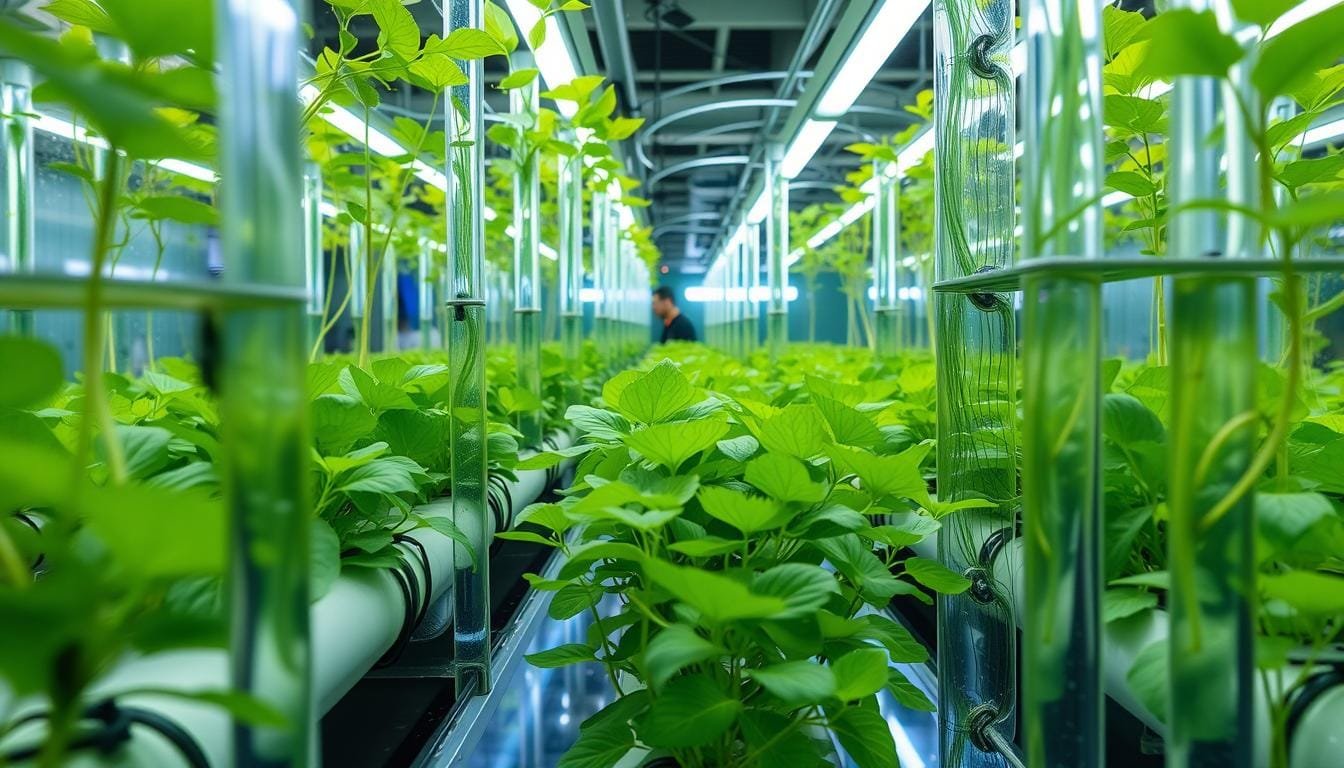
With the rise of climate change and less water, we need new farming methods. Closed system hydroponics saves a lot of water, making it a green choice. This method uses less water by reusing it, cutting down the environmental harm. It also stops soil problems and keeps nutrients from polluting water, making farming clean and green. Want to know how hydroponics can change how we grow food? Let’s explore the world of hydroponics together.
Closed system hydroponics doesn’t just save water. It lets farmers control how plants grow, leading to more crops and healthier food. But how can plants grow well without soil? They use special nutrient blends and high-tech tracking. This way, plants get what they need, fitting into eco-friendly farming perfectly.
What is Off-Grid Hydroponics?
Off-grid hydroponics is about growing plants without needing traditional power sources. This method uses water mixed with nutrients. It allows plants to grow up to 35% larger than in soil.
The Kratky method is a key player in off-grid hydroponics. Invented by Dr. Kratky, it’s a hydroponic system that doesn’t use electricity. It’s great for off-grid growing. The water in this system should stay at 75 degrees Fahrenheit. This supports the growth of small veggies and greens well.
For nutrients, you can make homemade solutions or use a specific mix. Compost tea and water, at a 50/50 ratio, works well. Or, for a 5-gallon bucket, mix 12 grams of Masterblend tomato formula, calcium nitrate, and magnesium sulfate. These mixes help plants grow strong.
You can set up an off-grid system with items like 5-gallon buckets from Lowe’s. Use net pots of 2″ or 3″ in these buckets. For different plant sizes, 6″ pot lids work too.
To grow plants successfully off-grid, knowing the basics is crucial. It’s important to keep an eye on nutrient levels and temperature. Adjust the water’s pH with lemon juice or baking soda as needed. Make sure to refill the buckets without overfilling to keep plants healthy.
Challenges and Drawbacks of Off-Grid Hydroponics
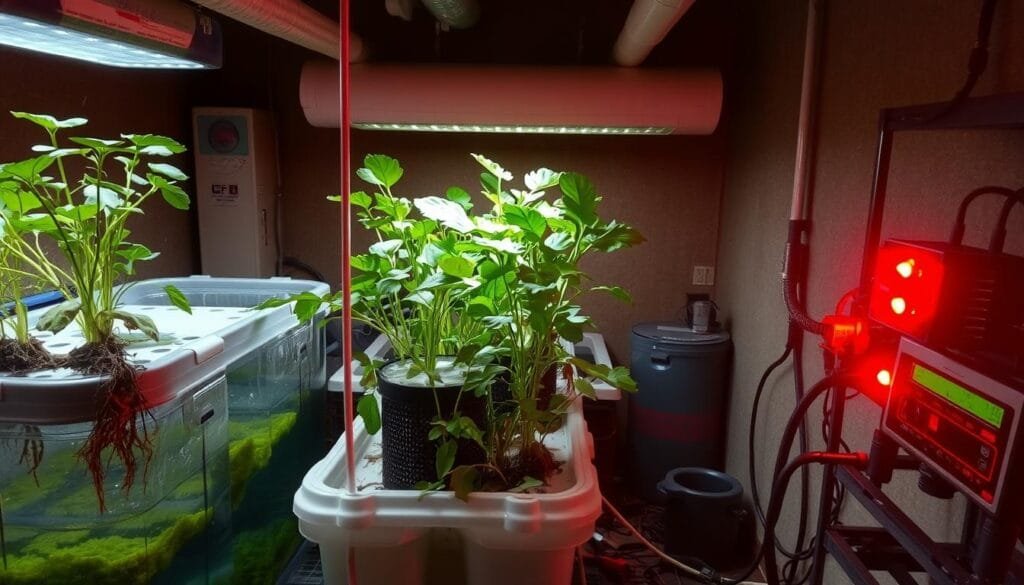
Off-grid hydroponics is appealing for those interested in off-grid farming. However, there are challenges to consider. One big issue is the high cost needed to start, especially when investing in renewable energy systems. These energy systems are key for keeping the hydroponic systems running smoothly.
It can also be tricky to keep nutrient solutions balanced without steady power. This might cause system failures, affecting plant growth and how much you harvest. Keeping pH levels and nutrient concentrations right is a constant task. It requires regular checks and some know-how.
Another big challenge is relying on technology for system checks and maintenance. This is hard in areas without much technical knowledge. Technical skills are also needed for managing nutrients, pH levels, and system upkeep.
Despite these hurdles, off-grid hydroponics has its upsides. These include saving water, plants growing faster, and less manual work due to automation. Yet, the need for renewable energy and the complex nature of off-grid farming are big things to think about for anyone wanting to start in this innovative agriculture area.
Types of Off-Grid Hydroponic Systems
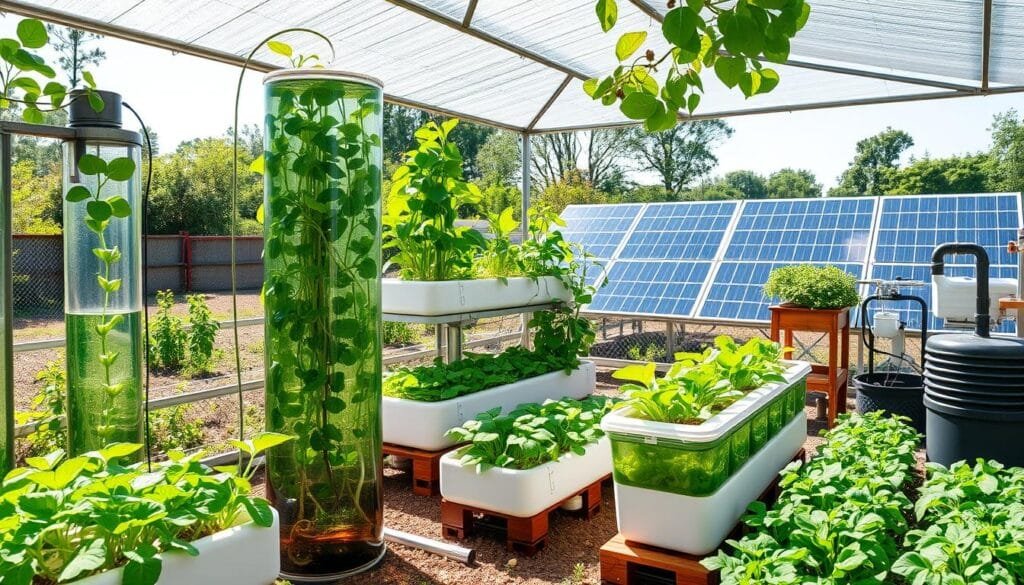
Off-grid hydroponic systems let you grow plants without using traditional power. There are several main types to consider:
1. Wick System: This is the easiest hydroponic setup. It doesn’t need electricity or moving parts. A wick pulls nutrient-rich water to the plant roots, making it simple to care for.
2. Deep Water Culture (DWC) System: DWC systems are popular and effective. They keep plant roots in nutrient-rich water. Oxygen is added through an air stone. This system grows plants fast and is easy to use.
3. Ebb and Flow: Known also as Flood and Drain, this system floods plants with water and nutrients, then drains. It gives plants what they need but is harder to set up and maintain than wick or DWC systems.
4. NFT System (Nutrient Film Technique): This advanced system has a thin water film flowing over roots. The NFT System is great for root health and getting nutrients efficiently.
5. Drip System: Here, a timer-controlled drip feeds nutrient solution to the roots. It’s flexible and allows for precise control of water and nutrients, fitting many plant types.
6. Aeroponics: This modern and efficient system hangs roots in the air, misting them with nutrients. It gives lots of oxygen to roots and helps plants grow quickly. However, it needs complex equipment and close watching.
Every off-grid hydroponic system has its own pros and cons. Choose one based on your needs, space, and what you’re hoping to achieve. It could be the simplicity of a wick system or the high-tech NFT System.
| Hydroponic System | Advantage | Disadvantage |
|---|---|---|
| Wick System | Requires no electricity, easy to maintain | Limited to smaller plants |
| Deep Water Culture (DWC) | High growth rates, effective oxygenation | Needs constant supervision of oxygen levels |
| Ebb and Flow | Efficient nutrient distribution | Requires more maintenance and setup |
| NFT System (Nutrient Film Technique) | Promotes healthy root development | Considered more advanced, complex setup |
| Drip System | Versatile, precise control | Potential for clogs in the drippers |
| Aeroponics | Maximizes oxygen availability, rapid growth | Complex and equipment-intensive |
Energy Sources for Off-Grid Hydroponic Systems
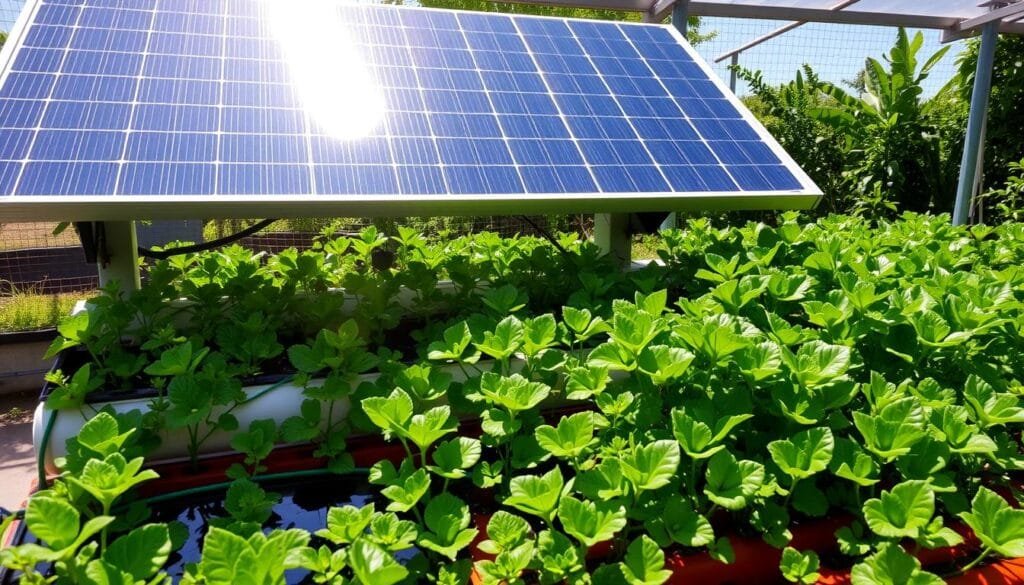
Looking into off-grid hydroponic systems, you have to think about energy. Solar energy is a top choice. A study showed 67% of these systems use solar power for lights. This cuts down electricity bills by 30%. So, solar panels are great for places far from the city power lines.
Using geothermal energy helps save on heating and cooling, slashing costs by 25%. Wind energy boosts plant growth by 15% because of better air flow. This shows how wind power is good for your crops.
Don’t overlook hydroelectric energy. It can drop the energy cost for moving nutrients by 40%. And, if the power goes out, biomass energy keeps things going. 82% of farms use it in places where blackouts are common.
Energy storage is key for steady power. Batteries for solar systems work 95% of the time. They keep the power on when the sun’s not shining. And mixing wind with solar power can give you 20% more energy.
Switching to renewable energy for LED lights cuts energy use by half. This makes your system both green and cheaper to run. These energy choices make your off-grid system strong, eco-friendly, and budget-friendly.
Essential Equipment for Off-Grid Hydroponics
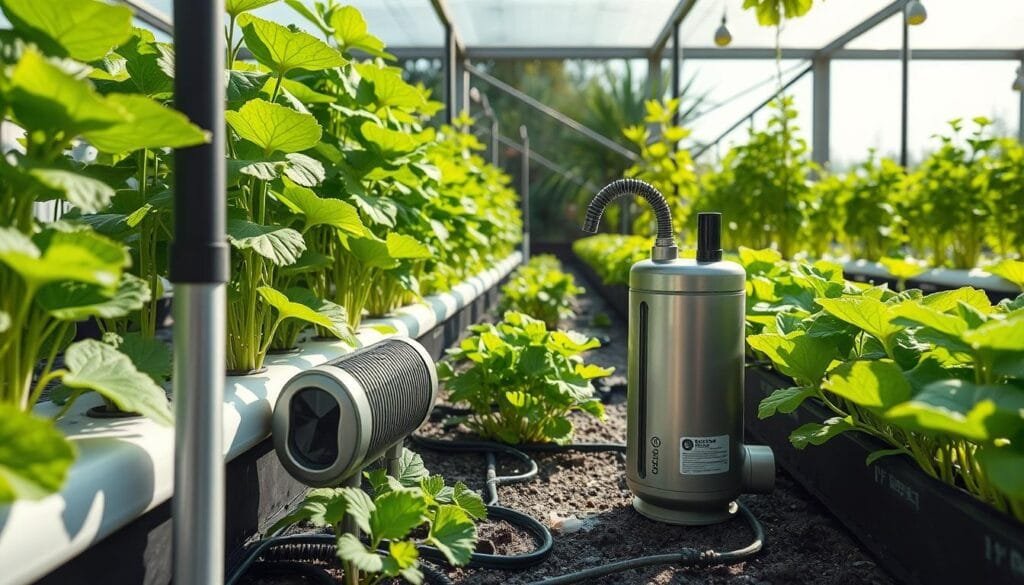
Starting an off-grid hydroponic garden means knowing the key equipment. One vital tool is Low-Energy Water Pumps. They keep water moving with low energy use.
Nutrient and pH controllers are also critical. They check and adjust nutrient levels and water acidity. This helps plants grow best in an off-grid garden.
Water storage tanks are needed too. They hold nutrient solutions. It’s important to have the right size tank for when water is scarce.
Adding smart sensors and automated controllers makes things easier. They track and adjust things like temperature and nutrients. This cuts down on the need for manual checks.
Here’s a useful table outlining some critical equipment and their functions:
| Equipment | Function |
|---|---|
| Low-Energy Water Pumps | Circulates nutrient solution efficiently without high energy usage. |
| Nutrient and pH Controllers | Maintains the optimal nutrient balance and pH levels. |
| Water Storage Tanks | Stores nutrient solutions to ensure a continuous supply. |
| Smart Sensors and Automated Controllers | Monitors and adjusts system parameters for improved efficiency. |
Choosing the right gear, like Low-Energy Water Pumps, ensures your off-grid hydroponic garden thrives. This setup will help your garden stay productive, no matter the environmental changes.
How to Build Your Own Off-Grid Hydroponic System
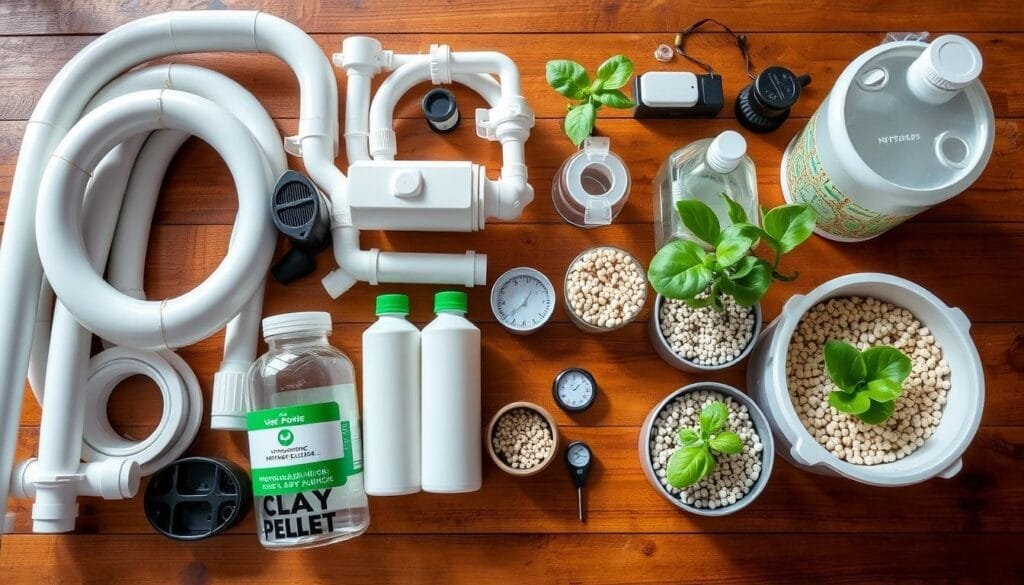
Creating your own off-grid hydroponic system is both fun and rewarding. You’ll need a few essential materials to start. These include PVC pipes, net cups, safe plastic containers, hydroponic nutrients, and an air pump. We’ll explore how to set up a Nutrient Film Technique (NFT) system, mixed with Deep Water Culture (DWC) aspects. The following steps will guide you through the setup process.
- Gather Required Materials: Pick up several 3″ PVC pipes, the backbone of your system. Make sure to have enough net cups—36 for this guide—to support your plants. Use safe plastic containers for the hydroponic system’s safety and effectiveness.
- Construct the Frame: Start by building a frame with the PVC pipes. This frame will hold your net cups and allow nutrient solution to flow smoothly.
- Drill Holes for Net Cups: Drill holes in the pipes using the right saw drill bits. You’ll need 36 holes for the net cups. Space the holes evenly for the best plant growth.
- Install the Oxygen Pump: Set up the air pump to keep oxygen levels up. While plants can survive up to 48 hours without it, continuous oxygen is crucial for their health.
- Prepare and Fill the Reservoir: Fill your safe containers with water and add the hydroponic nutrients. Keep the water topped off and change it fully every six months to keep nutrients balanced.
- Introduce the Plants: Add leafy greens and herbs like lettuce and basil to the net cups. These plants have shown a 100% success rate in our tests.
- Monitor and Adjust: Keep up with system maintenance. Change the water every 2-3 weeks to avoid nutrient issues. Check for any root blockages. Use black irrigation lines instead of clear ones to fight algae growth.
- Test and Optimize: Regularly test water for pH and nutrient levels. Quickly fix any nutrient shortages to maintain a healthy hydroponic garden.
If you follow this guide, you can create a successful and efficient off-grid hydroponic system. Success comes from careful system upkeep and constant monitoring of your plants. This way, you can achieve the best growth in your off-grid hydroponic project.
| Components | Description |
|---|---|
| PVC Pipes | Several 3″ pipes, primary structure for NFT system |
| Net Cups | 36 holes drilled for holding plants |
| Oxygen Pump | Maintains oxygen levels, absence duration up to 48 hours |
| Hydroponic Nutrients | Specialized nutrients essential for plant growth |
| Reservoirs | Safe plastic containers for nutrient solution |
Maintenance of an Off-Grid Hydroponic System
To keep your hydroponics running well, there are some key steps to follow. It’s important to regularly check your system. This makes sure it stays healthy and works right.
Keeping an eye on your energy source is key. Make sure your solar panels or other energy sources work properly. Also, maintain your batteries to keep energy flowing smoothly. To stop clogs and keep water moving well, clean and change your filters and pumps often.
- Energy Supply: Make sure your energy system is fully functional.
- Battery Health: Regular checks on battery conditions.
- Filter and Pump Maintenance: Clean and replace components as needed.
- Nutrient Dosage: Adjust based on plant growth stages.
Changing nutrient levels based on your plants’ stages and health is key. This ensures they get the food they need. This step is very important for your hydroponic garden’s success.
If you use preventative maintenance, you can save money in the long run. It also makes your system last longer and work better.
| System Maintenance Item | Description | Recommended Frequency |
|---|---|---|
| Energy Supply Checks | Ensure that solar panels and energy sources are working optimally. | Weekly |
| Battery Health Monitoring | Check for battery condition and charge levels. | Monthly |
| Filter Replacement | Prevent impurities from affecting plant health. | Every 3 Months |
| Pump Inspection | Ensure water and nutrient solutions circulate properly. | Bi-Weekly |
| Nutrient Adjustments | Tailor nutrient levels to plant growth stages. | As Needed |
Consistent care of your hydroponic system means it will last longer and do better. Using these sustainable methods will help your plants grow healthier in your hydroponic garden.
Best Plants to Grow in Off-Grid Hydroponics
Using hydroponics for off-grid life cuts costs and lets you grow food all year. The best plants to grow in off-grid hydroponics are high yield and use resources well.
- Spinach
- Lettuce
- Kale
- Swiss Chard
These leafy greens do great because they grow fast and don’t need much. They face fewer pests and need fewer pesticides, raising your success.
Other great plants are some fruits and herbs:
- Strawberries
- Tomatoes
- Cucumbers
- Peppers
These fruits adapt well to hydroponic growing. They give high yields in a controlled space, which means fewer pests and soil problems. Using solar panels can cut electricity costs, making it more green.
Hydroponic systems need just a few things to work: a waterproof basin, water, solution, and light. This lets you grow a lot of plants with little resources. Herbs like basil, mint, and oregano work great in hydroponics:
- Basil
- Mint
- Oregano
- Cilantro
Herbs can be harvested often and grown all year. They’re easy to maintain. Even simple DIY hydroponic setups using recycled items can make them thrive.
In conclusion, off-grid hydroponics is a great way to grow a mix of leafy greens, fruits, and herbs. These systems make better use of space, water, and energy. This makes growing your own food sustainably and self-sufficiently possible.
Costs of Setting Up an Off-Grid Hydroponic System
Setting up a hydroponic system comes with high initial costs, especially when adding solar panels or wind turbines. But, this investment in hydroponics pays off by making farming more cost-effective over time.
| Component | Cost Estimate |
|---|---|
| Materials for System Frame | $100 |
| Solar Panels | $1,000 – $3,000 |
| Solar-Powered Water Pump | $300 – $500 |
| Water Reservoir (8 gallons) | $50 |
| Nutrient Solutions | $100 |
| Growing Media | $50 – $100 |
| Automation and Control Systems | $200 – $500 |
Despite high start-up costs, hydroponic systems lead to big savings. They use up to 90% less water than traditional gardens, cutting down water bills. Plus, vertical setups produce more crops in the same space, making farming efficient.
These systems need less work thanks to automation, lowering ongoing costs. Solar hydroponics especially save money over time, paying for themselves in 3 to 5 years. It’s a smart investment in hydroponics for long-term savings.
Check out these financial perks of hydroponic farming:
- Lettuce grows faster in hydroponics, taking 30-35 days instead of 45-50 days in soil.
- Hydroponics can give you more and better crops.
- Using solar-powered pumps cuts out electricity bills, making hydroponics cheaper.
Growing certain crops can also bring in good money. For instance, 720 lbs of basil from hydroponics can earn between $7,200 to $15,840 a year. This shows off-grid hydroponics are both doable and profitable.
Conclusion
Off-grid hydroponics is a big step towards sustainable farming in our fast-changing world. It uses much less water compared to traditional farming. It recycles water to be more efficient. This is how hydroponics leads the way in farming’s future.
This method tackles big problems like not having enough water or good land. It allows for growing food all year, anywhere. Even places with tough winters like Ottawa, Canada, can benefit from it.
Hydroponic farming leads to more crops and faster growth. It also cuts down on chemicals, which is better for the planet. By growing crops upwards, it makes the most out of small spaces. This is great for cities.
These systems also stop nutrients from getting into and harming groundwater. This helps keep our water clean. It shows how we can use water without wasting it.
As we keep getting better at using hydroponics, it will become easier and more efficient. It offers a way to grow more food with less water and smaller carbon footprint. By adopting hydroponics, we’re moving towards a future where we can feed more people without harming the earth.
FAQ
What is closed system hydroponics?
Closed system hydroponics is a way to grow plants without soil. It uses a water solution that goes round and round. Unlike the old way where things get lost, this method saves water and food for the plants. You can control how much food and water plants get. This leads to less waste. It’s better for the planet and uses 80% less water than old methods.
How does off-grid hydroponics work?
Off-grid hydroponics uses sun or wind energy, not needing city power. It’s perfect for far-off places. Water and food for the plants go around in a circle, saving resources. This way of farming helps places without much water grow food.
What are the challenges of off-grid hydroponics?
Starting off-grid hydroponics can be pricey because of the clean energy gear. You need constant energy to keep everything balanced. If power fails, so might your system. You also need to know a lot about technology to keep things running. These are big hurdles, especially where it’s hard to find experts.
What types of off-grid hydroponic systems are available?
You can pick from several off-grid systems:
– NFT System (Nutrient Film Technique)
– DWC System (Deep Water Culture)
– Substrate System (Hydroponics with Substrates)
– Aeroponic System for Off-Grid Hydroponics
Each one suits different needs and plants.
What energy sources can power off-grid hydroponic systems?
For energy, off-grid systems use:
– Solar Energy
– Wind Energy
– Energy Storage Batteries
These make the systems run without needing city power. They’re good for the planet and work anywhere.
What essential equipment is needed for off-grid hydroponics?
You’ll need:
– Low-Energy Water Pumps
– Nutrient and pH Controllers
– Water Storage Tanks
– Smart Sensors and Automated Controllers
These make sure your plants grow strong without wasting resources.
How can I build my own off-grid hydroponic system?
To build your system, gather water pumps, nutrient solutions, trays, energy sources, and control systems. Follow detailed instructions to put everything together correctly. Knowing about hydroponics and renewable energy is key.
How do you maintain an off-grid hydroponic system?
Keep an eye on your energy and battery. Clean and fix filters and pumps often. Change nutrient levels based on your plants’ needs. Doing regular check-ups saves money and keeps your system going longer.
What are the best plants to grow in off-grid hydroponics?
Great plants for off-grid hydroponics include:
– Favorite Leafy Greens: like lettuce, spinach, kale.
– Fruits That Can Be Grown Off-Grid
– Herbs and Aromatic Plants
These plants do well in hydroponic setups and need less water and food.
What are the costs of setting up an off-grid hydroponic system?
Starting costs can be high because of the clean energy gear. But, you’ll save money on water, plant food, and work thanks to automation and growing valuable crops. Looking at all the costs helps you see if it’s worth it for you.
Source Links
- Off-Grid Hydroponics | Gardening Without Electricity or Soil
- Hydroponic Gardens – Pros and Cons – Beginning Hydroponics
- Pumpless (off Grid) Hydroponics With 5 Gallon Buckets
- Solar Hydroponic Farms: A Sustainable Farming Revolution
- Roots and Hydroponics: Everything You Need to Know
- Outdoor Hydroponics: A Few Things to Think About
[…] is a precious resource, especially in sustainable cultivation. Implementing eco-friendly irrigation methods ensures your medicinal tea plants stay hydrated […]